
17/04/2026 - Press release
The Vall d'Hebron Institute of Oncology (VHIO), which is part of the Vall d'Hebron Campus, has launched the phase 1 CATHERINE trial, in which patients with tumours overexpressing HER2 will be treated for the first time with an innovative next-generation CAR-T therapy developed by the research team led by Dr Joaquín Arribas in the Growth Factors Group at VHIO and the Hospital del Mar Research Institute Barcelona (HMRIB).
This academic phase 1 clinical trial is funded by the Spanish Association Against Cancer, with the support of Ausonia and the Carlos III Health Institute. The CAR-T cells will be produced at the Banc de Sang i Teixits (BST) of Catalonia.
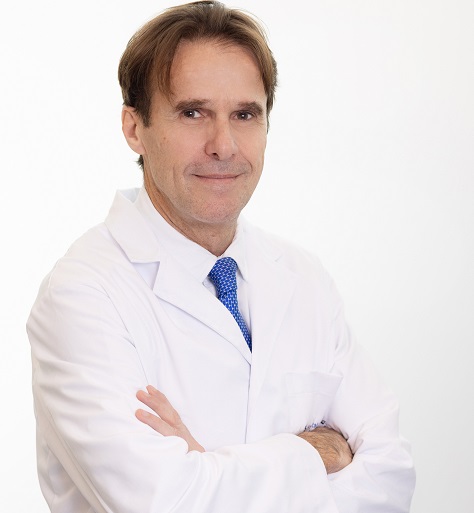
Dr Joaquín Arribas
What is CAR-T therapy?
CAR-T therapy is an advanced cell therapy that consists of genetically modifying the patient's immune cells, specifically T cells, so that they can attack specific tumour targets. CAR-T is the acronym for Chimeric Antigen Receptor T-cell, which refers to a T cell with a chimeric antigen receptor. This therapeutic approach has shown good results in haematological cancers, and one of the current challenges in research is to overcome the difficulties involved in translating these successful outcomes to CAR-T therapy in solid tumours.
Dual anti-tumour response
The therapy, developed by the team led by Dr Joaquín Arribas thanks to sustained funding from the Spanish Association Against Cancer with the support of Ausonia and the Breast Cancer Research Foundation, is a CAR-T directed against the p95HER2 protein, which is specifically present in one third of HER2+ tumours, and is capable of secreting the bispecific antibody TECH2Me which, firstly, recognises cells that overexpress HER2 and, secondly, activates immune cells in the tumour microenvironment.
"This dual mechanism of immune system activation has demonstrated a complete, durable and safe anti-tumour response in preclinical models derived from samples from patients with HER2- and p95HER2-positive tumours," explains Dr Joaquín Arribas, ICREA professor, head of the VHIO Growth Factors Group and director of the Hospital del Mar Research Institute (HMRI). These results were published in November 2024 in the journal Nature Communications (Roman et al.) by the team led by Arribas and have formed the basis for launching the phase 1 CATHERINE clinical trial at VHIO and Hospital del Mar.
Tumours overexpressing HER2
At normal levels, the HER2 protein plays an important role in the growth and development of a wide variety of cells known as epithelial cells. However, overexpression of this protein drives uncontrolled cell division and growth, contributing to the development and progression of cancer.
It is estimated that 4% of tumours overexpress HER2, rising to up to 15% in breast cancer. More than one third also express an altered form of HER2 known as p95HER2, which is associated with more aggressive tumours.
"HER2 is the most targeted receptor in the development of cancer therapies, especially in breast or gastric cancer," explains Dr Irene Braña, medical oncologist at the University Hospital Vall d'Hebron and at the Cancer Molecular Research Therapy Unit (UITM-CaixaResearch) of VHIO, and principal investigator of the CATHERINE trial. "Multiple therapeutic options have been developed to treat this tumour subgroup. However, there remains a significant number of patients, up to one third of patients with advanced HER2+ breast cancer, who do not respond to these therapies."
Patient recruitment now open
"The aim of the trial is to evaluate the safety and preliminary efficacy of this CAR-T therapy in patients with HER2-driven solid tumors who have exhausted all available treatment options and are candidates to receive a cellular therapy such as CAR-T," state Dr. Irene Braña and Dr. Vladimir Galvao, both senior investigators at the Cancer Molecular Therapy Research Unit (UITM-CaixaResearch) at VHIO, specialists in early drug development and clinical investigators of the trial. "It is important to note that, prior to receiving CAR-T therapy, patients must undergo a very intensive chemotherapy regimen, and therefore must meet very specific clinical inclusion criteria," they add.
The trial will recruit around fifteen patients and will be conducted at VHIO's Phase I Unit, the UITM-CaixaResearch, and at Hospital del Mar.
"In addition to offering a new therapeutic opportunity, the conduct of this study will allow further progress in the research of this therapy, helping us to better and more precisely identify the patients who may benefit most from this therapeutic strategy," says Dr Arribas.
A decade of research support
The laboratory of Dr Joaquín Arribas at VHIO has received funding from the Breast Cancer Research Foundation for 20 years. The Spanish Association Against Cancer, through collaboration with the company Ausonia supporting breast cancer research, has funded this project headed by Dr Arribas, enabling the hiring of up to four generations of predoctoral researchers, which has allowed the project to advance from CAR-T development to clinical application.
"For the Spanish Association Against Cancer, it is greatly satisfying to see how more than 10 years of sustained support have made it possible for an idea to become a new therapeutic option ready to be evaluated in patients. There is still a long way to go to confirm its safety and efficacy, but reaching the clinical phase is a decisive step and an achievement that demonstrates the value of sustained investment in innovative research,"
says Marta Puyol, Scientific Director and Deputy Director General of the Scientific Foundation of the Spanish Association Against Cancer.
The challenge of cell therapies in solid tumours
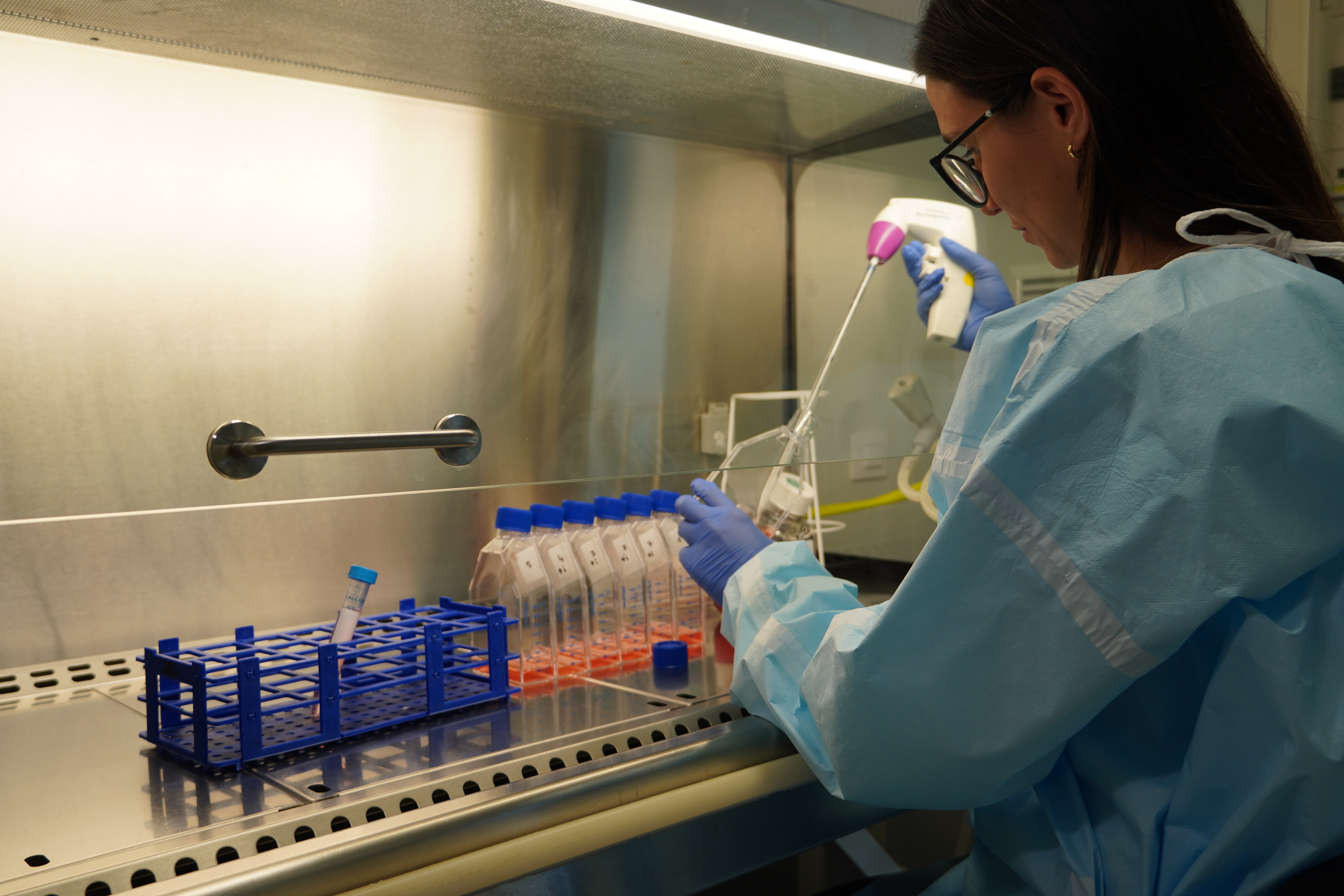
The development of CAR-T therapies in solid tumours presents a challenge compared with the success achieved in haematological cancers, due to factors such as tumour heterogeneity, microenvironmental barriers, and the difficulty of T cells infiltrating and persisting within the tumour.
"Despite these limitations, the results obtained by our CAR-T in preclinical models have been very promising. However, it is essential to validate these findings in this clinical trial, first to confirm safety and subsequently efficacy.
That is why," continues Arribas, "we are especially pleased to have succeeded in translating more than a decade of laboratory research into clinical practice through an academic phase 1 trial funded by the Spanish Association Against Cancer, with the support of Ausonia, and the Breast Cancer Research Foundation. We are entering this new stage with great enthusiasm, awaiting the first results."
As part of the CAIMI Programme of the BBVA Foundation, the research of the VHIO Growth Factors Group focuses on advancing new therapies designed to improve the immune response against tumours overexpressing HER2.
References
Macarena Román, Ariadna Grinyó-Escuer, Santiago Duro-Sánchez, Irene Rius-Ruiz1, Marta Bort-Brusca, Marta Escorihuela, Susana Maqueda-Marcos, Sandra Pérez-Ramos, Judit Gago, Vanesa Nogales, Martín Espinosa-Bravo, Vicente Peg, Santiago Escrivá-de-Romaní, Laia Foradada, Laura Soucek, Irene Braña, Vladimir Galvao, Silvia Martín-Lluesma, Ekkehard Moessner, Christian Klein, Elena Garralda, Cristina Saura and Joaquín Arribas. Generation of chimeric antigen receptor T cells targeting p95HER2 in solid tumors. Nat Commun. Nov 24. DOI: 10.1038/s41467-024-53265-7.
© Institut Hospital del Mar
d'Investigacions MèdiquesLegal Notice and Privacy Policy | Cookie Policy | Site Index | Accessibility | Find Us | Contact