
26/10/2026 - General information
Blood-based biomarkers are transforming how Alzheimer's disease is detected. However, until now, most studies have focused on their diagnostic accuracy. A new study, published in JAMA Neurology, has explored a different question with direct implications for clinical practice: what is the impact of communicating these results to patients as soon as they become available?
The study shows that using blood-based biomarkers in routine clinical practice improves diagnostic certainty and helps optimize clinical management, without increasing patients' anxiety, depression or stress. The findings therefore support integrating blood-based biomarkers into neurology care pathways and communicating their results as early as possible.
The research was conducted as part of the PLASMAR study, a prospective clinical trial designed to evaluate the impact of blood-based biomarkers. Conducted through a collaboration between Hospital del Mar and the Barcelonaβeta Brain Research Center (BBRC), a research centre of the Pasqual Maragall Foundation, the study included 220 people with cognitive symptoms referred from primary care to the hospital's Neurology Department. Participants had a mean age of 73 years, and 55.9% were women. They were classified into three groups according to their symptoms: subjective cognitive decline, mild cognitive impairment or mild dementia.
The research team analysed two blood-based biomarkers: p-tau217 and neurofilament light chain (NfL). The 220 participants were divided into two groups: an early disclosure group comprising 112 patients, who received their results after three months, and a delayed disclosure group comprising 108 patients, who received their results after nine months.
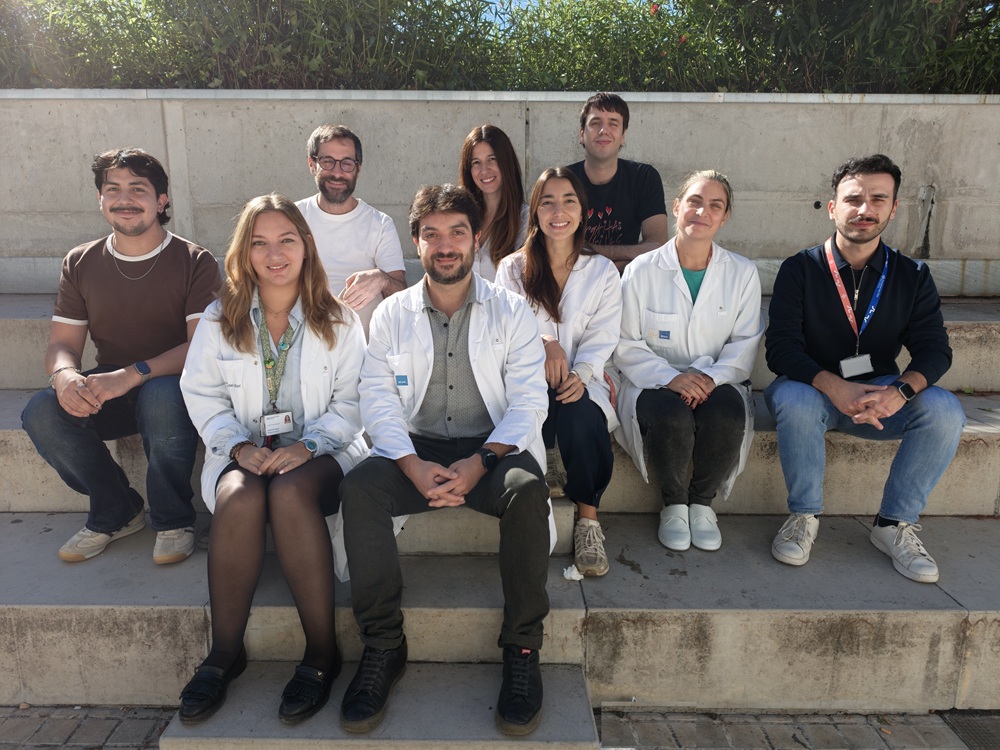
Research team
Faster clinical decisions and more efficient follow-up
Following blood sampling and an initial clinical assessment, participants were randomly assigned to one of two groups. In the early disclosure group, clinicians and patients received the biomarker results at three months, whereas those in the delayed disclosure group received them at nine months. This design enabled the researchers to compare how the timing of result disclosure influenced diagnostic certainty and clinical decision-making.
At three months, 50% of patients who had received their biomarker results had an aetiological diagnosis (identifying the underlying cause of their symptoms) with a confidence level of 90% or higher, compared with just 4.6% of patients who had not yet received this information. This difference disappeared at nine months, once both groups had received their results.
These findings indicate that access to biomarker results enables clinicians to establish greater certainty about the underlying cause of symptoms at an earlier stage and make better-informed clinical decisions.
"So far, many studies have shown that blood-based biomarkers are accurate tools for detecting Alzheimer's disease pathology. What we wanted to investigate was what happens when this information is actually incorporated into clinical care pathways and communicated to patients. Our findings show that having access to these results earlier makes it possible to achieve greater diagnostic certainty and make clinical decisions more quickly," explains Dr Isabel Estragués, first author of the study, neurologist in the Cognition and Behaviour Unit at Hospital del Mar and researcher at the BBRC.
Having access to the results at three months was also associated with changes in patient management. Among participants who received their results earlier, 14.3% started symptomatic treatment, compared with 4.6% in the group that waited until nine months.
Similarly, planned neuropsychological reassessments were less frequent among patients who had received their biomarker results earlier: 30.4%, compared with 52.8% in the delayed disclosure group.
This difference was particularly relevant among people with no objective cognitive impairment on neuropsychological testing and a low likelihood of Alzheimer's disease based on their p-tau217 levels. In these cases, earlier access to the results facilitated patient discharge from specialist care and avoided unnecessary follow-up appointments.
Overall, these findings suggest that blood-based biomarkers can help not only to identify the likely cause of symptoms earlier, but also to make clinical care pathways more streamlined and efficient.
Earlier access to information did not increase emotional distress
One of the distinctive aspects of the study is that it also examined how receiving this information earlier affects patients.
Disclosure of results at three months was not associated with increased anxiety, depression or perceived stress. In fact, stress levels decreased in the group that received their results at three months, while they increased temporarily in the group that had to wait until nine months. No significant differences in quality of life were observed between the two groups.
"Introducing blood-based biomarkers into memory clinics also raises the question of how receiving this information may affect patients. In our study, disclosing results at three months was not associated with poorer emotional well-being. On the contrary, it helped guide clinical follow-up at an earlier stage without increasing anxiety, depression or stress," adds Leidy Dayana, researcher at the BBRC and Hospital del Mar and co-author of the study.
Towards integrating blood-based biomarkers into memory clinics
Overall, the findings support integrating blood-based biomarkers into routine neurology workflows and communicating the results as soon as they become available.
In this regard, Dr Albert Puig Pijoan, co-author of the study, coordinator of the Cognition and Behaviour Unit within the Neurology Department and researcher at the Hospital del Mar Research Institute, explains, "having access to these biomarkers can help improve diagnostic certainty at an earlier stage, guide clinical decisions and avoid follow-up appointments or tests that may not be necessary. These findings show that their value depends not only on their ability to support diagnosis, but also on how and when we integrate them into clinical practice."
The authors nevertheless acknowledge several limitations. The study was conducted at a single centre, which may limit the generalizability of the findings to other healthcare settings, and follow-up was limited to nine months. Furthermore, not all participants underwent reference standard tests, such as cerebrospinal fluid analysis or amyloid PET imaging. This was because the primary aim of the study was not to assess the diagnostic accuracy of blood-based biomarkers, but rather to examine the clinical impact of having access to these tests and communicating their results.
The findings therefore provide valuable insights into a key aspect of clinical implementation: not only the ability of biomarkers to support diagnosis, but also the impact of making this diagnostic tool available in clinical settings and communicating the results to patients at the appropriate time.
Reference article
Estragués-Gázquez, I., Contador, J., Martínez, L. D., Fernández-Lebrero, A., García-Escobar, G., Navalpotro-Gómez, I., Grau-Rivera, O., Iaccarino, G., Manero-Borràs, R. M., Ortiz-Romero, P., Hernández-Villamizar, F., Torres-Torronteras, J., de Diego-Osaba, M., Blasco-Forniés, H., Jiménez-Moyano, E., Hernández, J. J., Padrós, A., del Campo, M., Puig-Pijoan, A., & Suárez-Calvet, M. (2026). Earlier disclosure of blood-based biomarkers, diagnostic certainty, and clinical management: A randomized clinical trial. JAMA Neurology. https://doi.org/10.1001/jamaneurol.2026.3497
Servei de Comunicació:
Marta Calsina(ELIMINAR)
Tel:
(+34) 93 316 06 80
Doctor Aiguader, 88
08226 Barcelona
© Institut Hospital del Mar
d'Investigacions MèdiquesLegal Notice and Privacy Policy | Cookie Policy | Site Index | Accessibility | Find Us | Contact
