
21/09/2026 - General information
Dr Marc Suárez-Calvet is a co-author of a Seminar article published in The Lancet, in which leading international experts in Alzheimer's disease review the latest developments in research into this condition.
Alzheimer's research has reached a pivotal moment. Advances made in recent years point towards a new era in the diagnosis and treatment of the disease, one of the leading causes of dementia worldwide, affecting more than 800,000 people in Spain alone. To examine where we are now and where the field is heading, The Lancet has published an in-depth Seminar article aimed at medical students and healthcare professionals who are not specialists in this area.
Among the seven international experts selected to prepare the article is Dr Marc Suárez-Calvet, from the Barcelona Brain Health Center (BBHC) at Hospital del Mar, the Hospital del Mar Research Institute and the Barcelonaβeta Brain Research Center of the Pasqual Maragall Foundation. Below, he outlines the main conclusions.
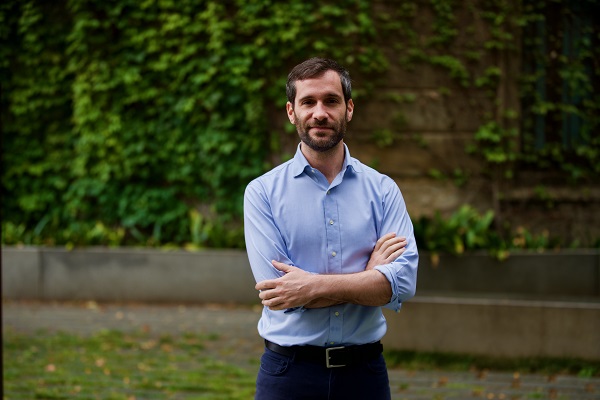
Dr. Marc Suárez Calvet
A pivotal moment in advances in Alzheimer's disease
We are entering a new phase. For many decades, we have been able to diagnose Alzheimer's disease clinically, but we had few tools to demonstrate its underlying biology during a patient's lifetime and virtually no treatments capable of modifying the course of the disease.
This is now changing on several fronts simultaneously. Today, we can detect alterations in amyloid and tau proteins much more accurately using tests such as PET imaging, cerebrospinal fluid analysis and, increasingly, a simple blood test. At the same time, the first treatments targeting amyloid protein have shown that it is possible to slow the progression of the disease, albeit moderately, in its early stages. These treatments have been approved by the European Medicines Agency but are not yet available in Spain.
For the first time, therefore, we have both highly accurate biomarkers and disease-modifying treatments. This is transforming Alzheimer's from a primarily clinical and symptom-based diagnosis into a disease that can be characterised biologically and specifically targeted.
The most significant advances
I would highlight three in particular:
The first is blood-based biomarkers, especially phosphorylated tau and, in particular, p-tau217. These biomarkers are highly accurate in identifying Alzheimer's pathology in people with cognitive impairment. This could greatly simplify the diagnostic process and reduce the need for more complex, costly or invasive tests, such as PET scans or lumbar punctures, in some patients. However, it is important to emphasise that these biomarkers must be used as part of a structured clinical diagnostic process. A blood test does not replace a clinical assessment of the patient. The Neurology Department at Hospital del Mar has been a global pioneer in the development, validation and implementation of these biomarkers.
The second is anti-amyloid immunotherapies, such as lecanemab and donanemab. These are the first treatments to consistently demonstrate that removing amyloid protein from the brain can slow clinical progression in people with early symptomatic Alzheimer's disease. The benefits remain modest, and the treatments involve risks and significant monitoring requirements, but they nevertheless represent a major conceptual shift. We have moved from treating symptoms alone to being able to target one of the biological mechanisms underlying the disease.
The third is the possibility of detecting the disease much earlier. We know that the biological changes associated with Alzheimer's begin many years before the onset of dementia. The new biomarkers allow us to study this preclinical stage and open the door to a future in which we may be able to intervene before significant brain damage has occurred.
Where efforts should be focused
One of our main objectives must be to move towards prevention and early treatment. If we intervene once neurodegeneration is already very advanced, it is difficult to recover lost neurons. We will probably need to act much earlier.
We also need treatments that are more effective, safer and capable of targeting multiple mechanisms. Alzheimer's disease is not only about amyloid protein. Tau protein, neuroinflammation, vascular dysfunction, metabolic alterations and other processes are also involved. These will probably require combinations of therapies, similar to the approach adopted in oncology.
Another fundamental challenge is clinical implementation. Having a biomarker or a drug is not enough: we must clearly establish which patients can benefit, how to select them, how to interpret the results and how to organise healthcare pathways so that these innovations are accessible, safe and sustainable.
Finally, we must continue researching prevention, both through interventions targeting modifiable risk factors and through pharmacological strategies for people in the very earliest biological stages of the disease.
In this regard, the Barcelona Brain Health Center (BBHC) project, co-led by Hospital del Mar and the BBRC, incorporates many of these features and could help drive the model of care of the future.
Towards a new era in Alzheimer's disease
The main conclusion is that we are entering a new era in Alzheimer's disease, but we have not yet reached our goal.
We have made extraordinary progress in understanding the disease, in biomarkers, neuroimaging and genetics and, for the first time, in treatments capable of modifying its progression. However, the effects of current treatments remain limited, and we are still unable to prevent or completely halt the disease.
The message should therefore not be triumphalist, but one of cautious yet determined optimism. We now know that modifying the biological course of Alzheimer's disease is possible. The challenge is to build on this first step to develop more effective, safer and more accessible treatments and, above all, to intervene earlier.
Reference article
Serrano-Pozo A, Escott-Price V, Grinberg LT, Pascoal T, Suárez-Calvet M, Dubois B, Sperling RA. Alzheimer's disease. Lancet. 2026 May 30;407(10544):2241-2262. doi: 10.1016/S0140-6736(26)00198-4. Erratum in: Lancet. 2026 Jul 4;408(10549):30. doi: 10.1016/S0140-6736(26)01302-4. PMID: 42208565.
Servei de Comunicació:
Marta Calsina(ELIMINAR)
Tel:
(+34) 93 316 06 80
Doctor Aiguader, 88
08226 Barcelona
© Institut Hospital del Mar
d'Investigacions MèdiquesLegal Notice and Privacy Policy | Cookie Policy | Site Index | Accessibility | Find Us | Contact