
An international research consortium, led by the University of Utah School of Medicine in Salt Lake City, United States, has discovered a new pathway that could enable the development of new cancer treatments. The study, published in the journal Nature Structural & Molecular Biology, involved researchers from institutions in the United States, Germany, Switzerland and Spain. Tomasz Maciej Stepniewski, co-first author of the study, and Jana Selent, who leads the G protein-coupled receptor-based drug discovery research group at the Hospital del Mar Research Institute, are the only authors from a Spanish centre.
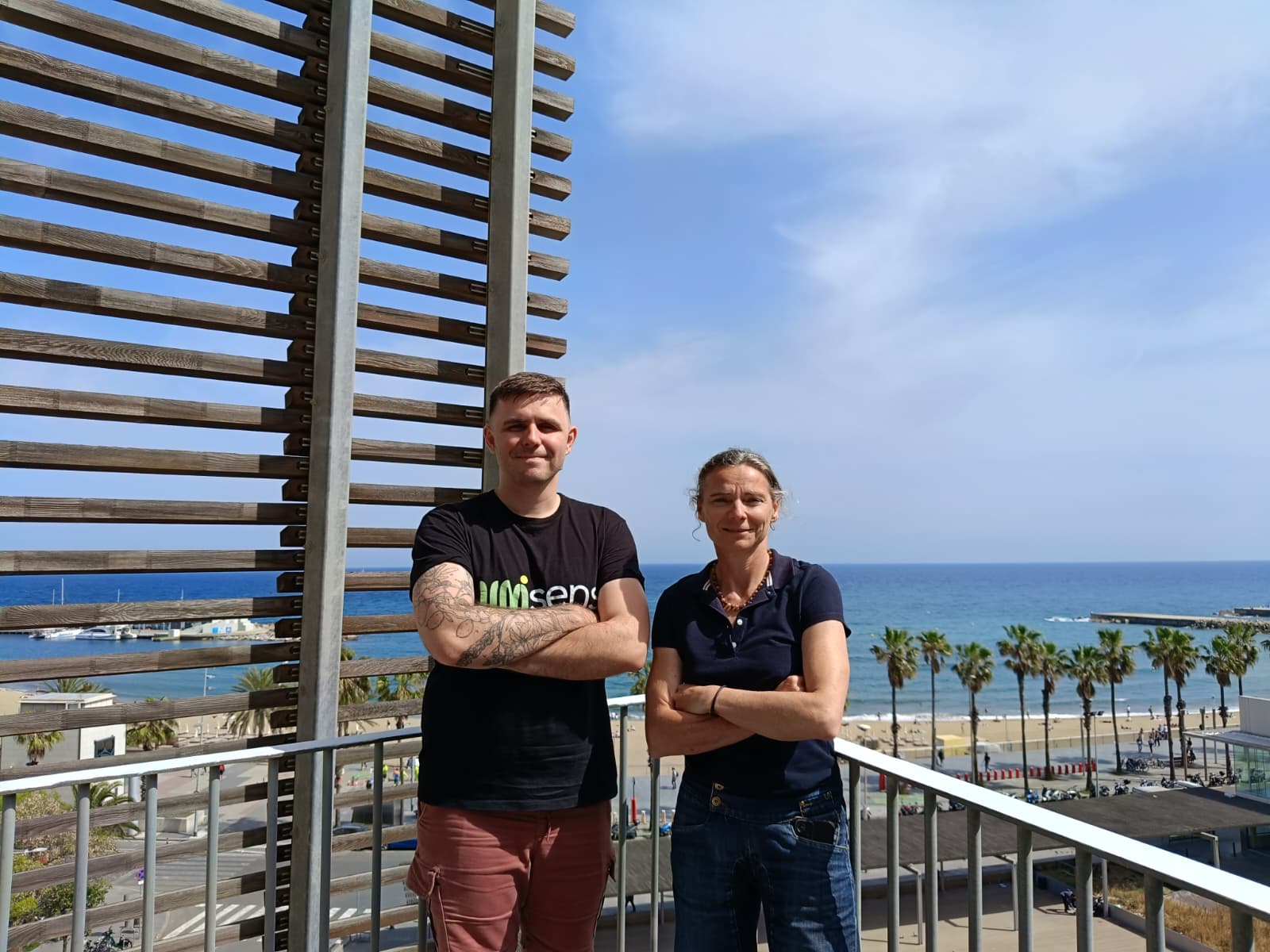
Tomasz Maciej Stepniewski and Jana Selent
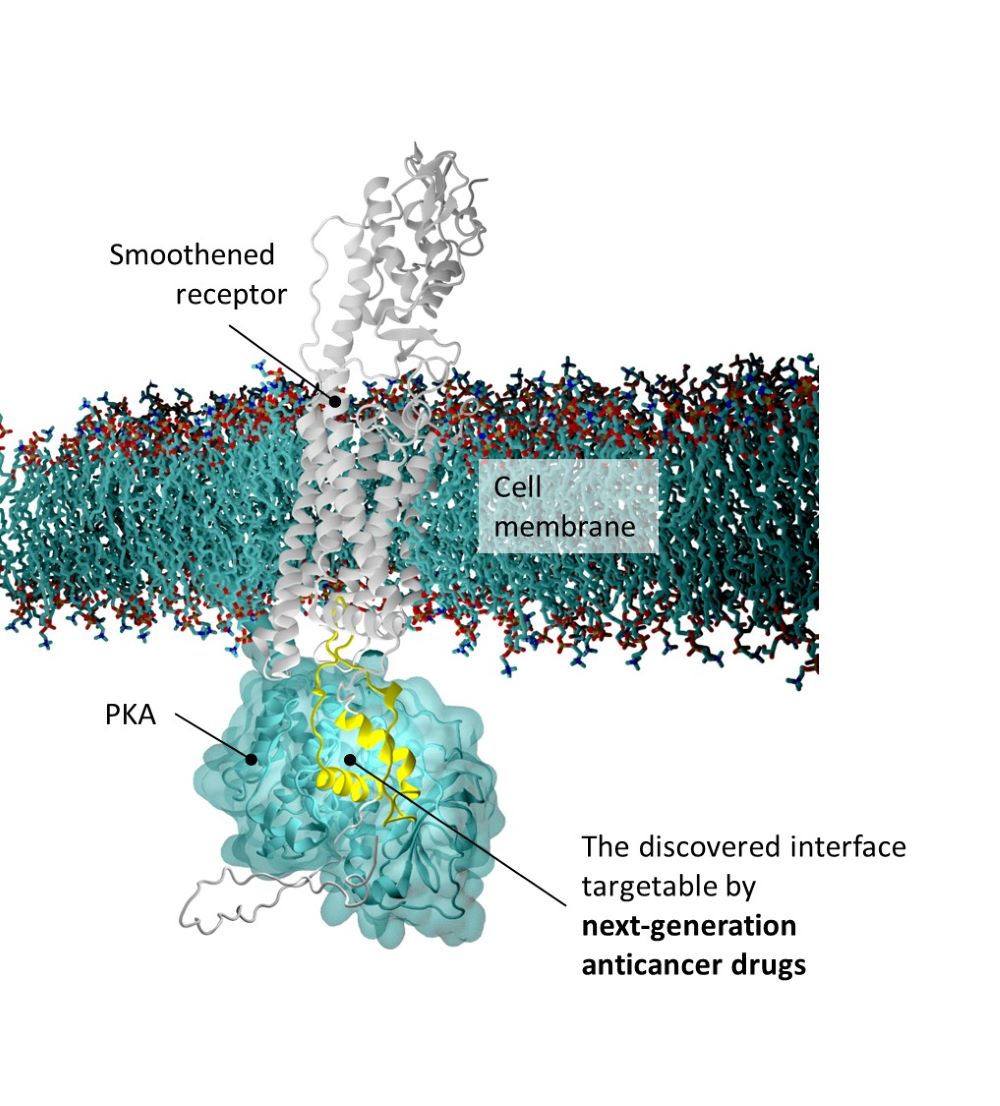
In this study, the researchers used molecular modelling techniques and artificial intelligence tools for the first time, allowing them to design experiments and resolve the structure of the proteins studied. Specifically, they examined the relationship between a cellular receptor protein, Smoothened, which is involved in the development of tumours such as basal cell carcinoma, medulloblastoma and some pancreatic and lung cancers, and the protein PKA, or protein kinase A. The study discovered how Smoothened blocks the action of PKA, whose function is to help control cell growth. When this happens, cells can grow more easily and cause tumours.
"This is an important advance because it redefines the way scientists understand how cellular receptors function, revealing a new mechanism by which these receptors can transmit signals inside the cell", explains Stepniewski. Thanks to the use of advanced artificial intelligence models, the researchers were able to analyse and predict molecular-level interactions between the proteins, revealing a previously unknown interaction mechanism. "This finding reveals a distinct signalling mechanism, in which the receptor not only activates reactions indirectly, but also establishes direct contact with a key protein in the pathway", he adds.
Treatments focused on the direct interaction between proteins
Current treatments that target Smoothened aim to completely deactivate this protein, which can cause side effects or lead them to lose effectiveness over time. Their design was based on static receptor structures and experimental assays. By understanding the mechanism of direct interaction between this receptor and PKA, researchers can "design new and more precise treatments that restore the cell's natural control capacity instead of completely deactivating it", according to Jana Selent. This discovery opens the door to more effective therapies that act directly on this interaction and have fewer side effects for patients. In other words, "a new path for the development of cancer drugs".
The team responsible for the study believes that its conclusions may be applicable to other receptors involved in tumour development. The next step will be to develop new molecules capable of acting on this mechanism and test them in preclinical models. To support this work, the researchers have made the models they created available free of charge to other scientists and companies.
Reference article
Steiner, W.P., Iverson, N., Liu, G. et al. Structural mechanism for noncanonical GPCR signaling in the Hedgehog pathway. Nat Struct Mol Biol (2026). https://doi.org/10.1038/s41594-026-01800-z
Further information
Communication Department, Hospital del Mar Research Institute/Hospital del Mar: Marta Calsina 93 3160680 [email protected], David Collantes 600402785 [email protected]
Servei de Comunicació:
Marta Calsina(ELIMINAR)
Tel:
(+34) 93 316 06 80
Doctor Aiguader, 88
08226 Barcelona
© Institut Hospital del Mar
d'Investigacions MèdiquesLegal Notice and Privacy Policy | Cookie Policy | Site Index | Accessibility | Find Us | Contact